


Let’s start with the catalyst. What sparked your interest in writing and fashion, respectively? When and why did you start to draw a connection between the two?
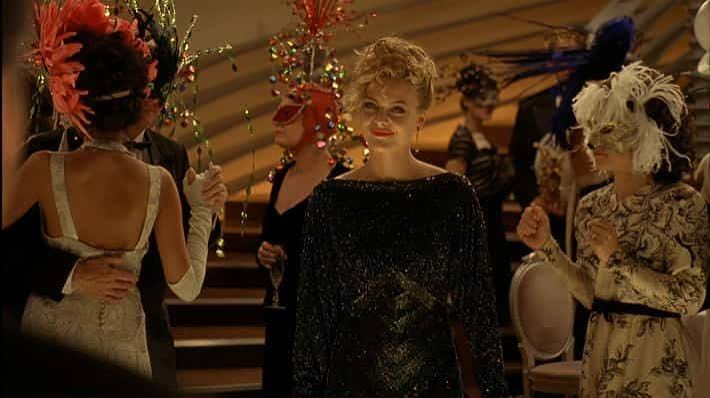
This is actually a question I’ve been trying to answer myself in a new textbook I’ve been working on. The project is tentatively called Ready-To-Wear: Teaching Poetry and Fashion in the Classroom. But lately it’s been feeling more essayistic in certain spots. I have been trying to pinpoint the moment when I knew I had an interest in fashion. And maybe it’s not so much an interest in fashion as an interest in masks. Or fashion-as-mask. Poetry-as-mask. My earliest formative fashion memory actually comes from Tim Burton’s Batman Returns. I was probably 6 or 7 when I saw it. There’s a masquerade ball scene filled with elaborate masks.
Can you say more about what you mean by “poetry-as-mask”?
When I think of “poetry-as-mask,” I think of persona. Or what the “I” is doing in a line of poetry. The “I” in my poetry is not necessarily me.
I love that framing–the speaker of the poem as a “mask”–thanks for sharing! How was the concept for Seam Allowance born? Tell me about the origin of that idea.
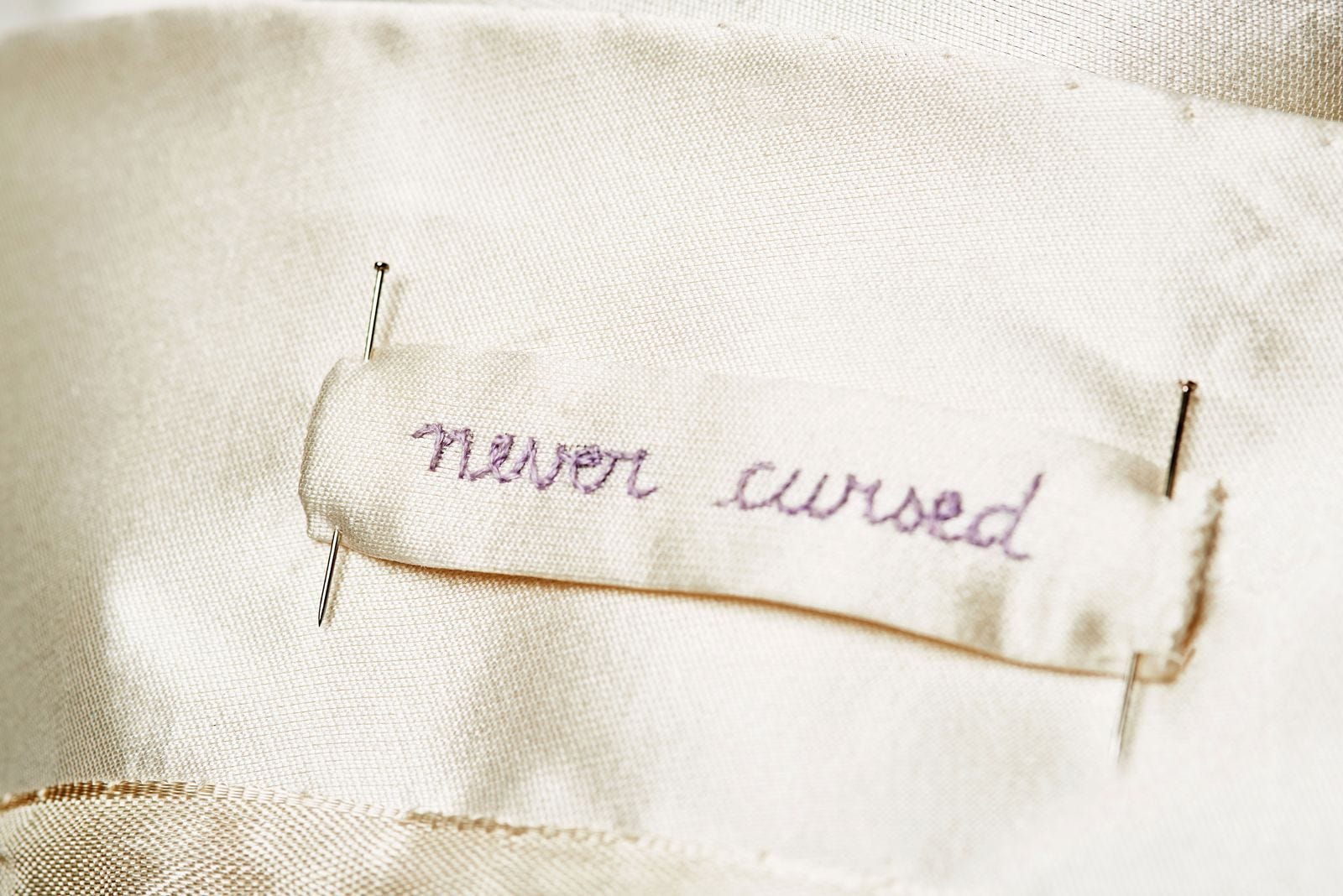
Total whim. Total and complete compulsion. Earlier this June I was watching Phantom Thread for the umpteenth time. (The protagonist is a couturier played by Daniel Day-Lewis. In the film he uses seam allowances to hide secret messages like ‘never cursed’ into the dresses he makes.) I went to bed. Woke up in the middle of the night with the idea. Within 48 hours, Seam Allowance was live.
Wow, you work fast! What does the name Seam Allowance mean to you?
Yes, it just kind of came to me. The way I wanted the site to look. The pairings were the driving factor. As far as the name, so, seam allowances are what join pieces of fabric together. On the submissions page of the website, I say that Seam Allowance, as a literary fashion webzine, represents an “invisible expanse between the cutting line and the stitching line.” I appreciate the contradiction of the phrase “invisible expanse.” A presence in absence. Something hidden. Something sublime. For me, I feel most excited about art when I feel like I’m in conversation with the sublime. So, first and foremost, Seam Allowance is a space for experimentation. A space for formal risks. But also a space for contradictions. Camp itself.
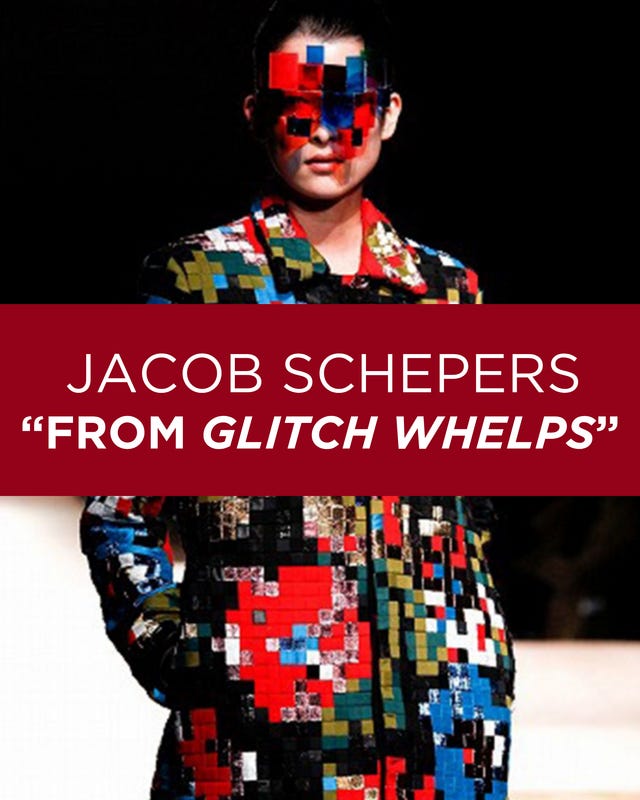
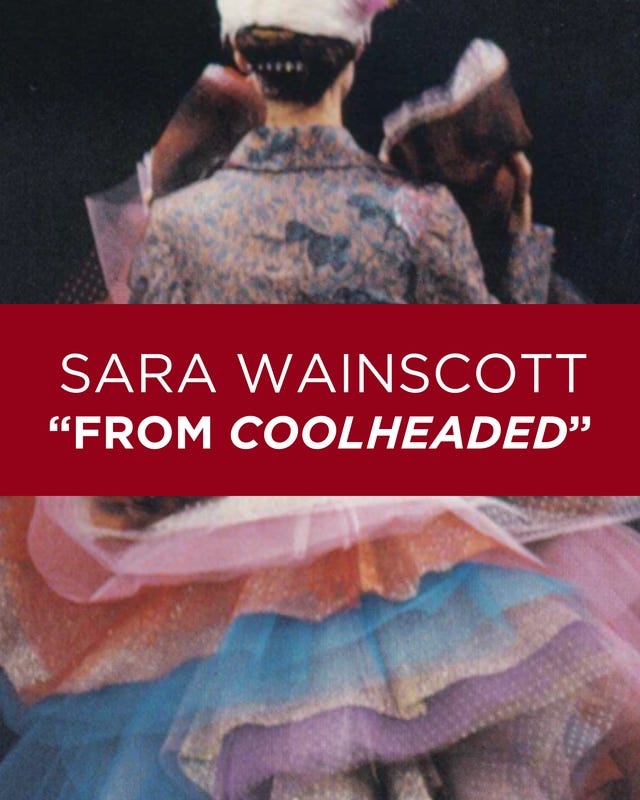
That’s so interesting! You’ve done a great job with the visuals on the website. The pairings of writing + fashion pieces/looks is definitely what drew me into each piece you’ve posted. I’ve been really interested lately in ekphrasis–how written word becomes visual and vise versa. I understand that you receive submissions of written work that you then pair with a garment, which I see as a kind of reverse-ekphrasis. Do you consider Seam Allowance an ekphrastic publication? Why or why not?
Thank you! I’m not sure if I view it as reverse-ekphrasis, but I think I see what you mean. I need to think about it more. Perhaps if writers were sending me their work and I was pairing their pieces with my own hand-sketched conceptions of original garments, maybe that would be closer to a reverse-ekphrasis. In any case, I think Seam Allowance could be a great teaching resource for those interested in including fashion in discussions of creative writing. It might be interesting to show students one of the featured garments, have them write an ekphrastic response, and then conclude by revealing the original piece of writing. Would be interesting to see if there are any parallels.
How do you go about selecting an image to pair with each piece? What guides you in that decision?
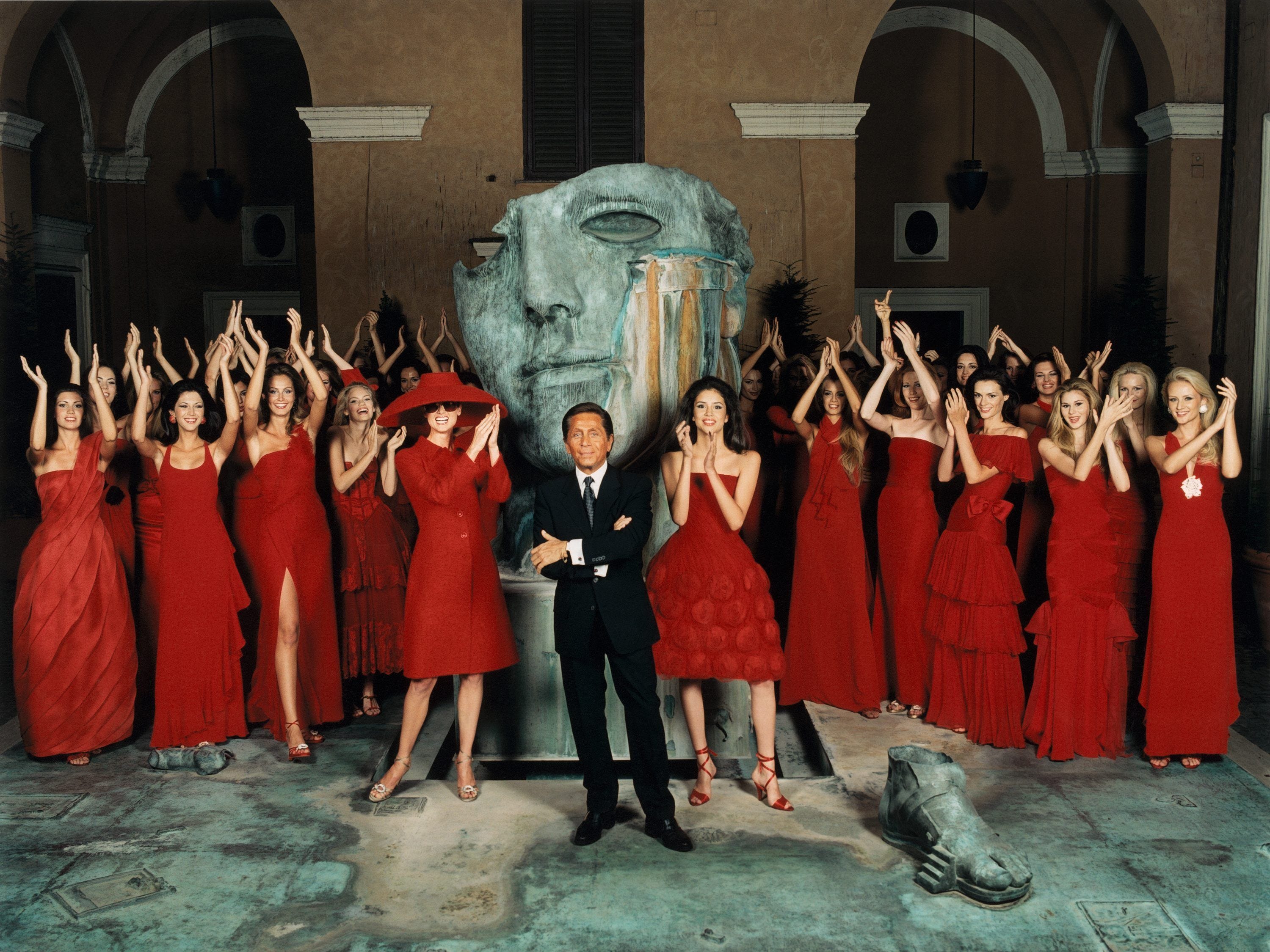
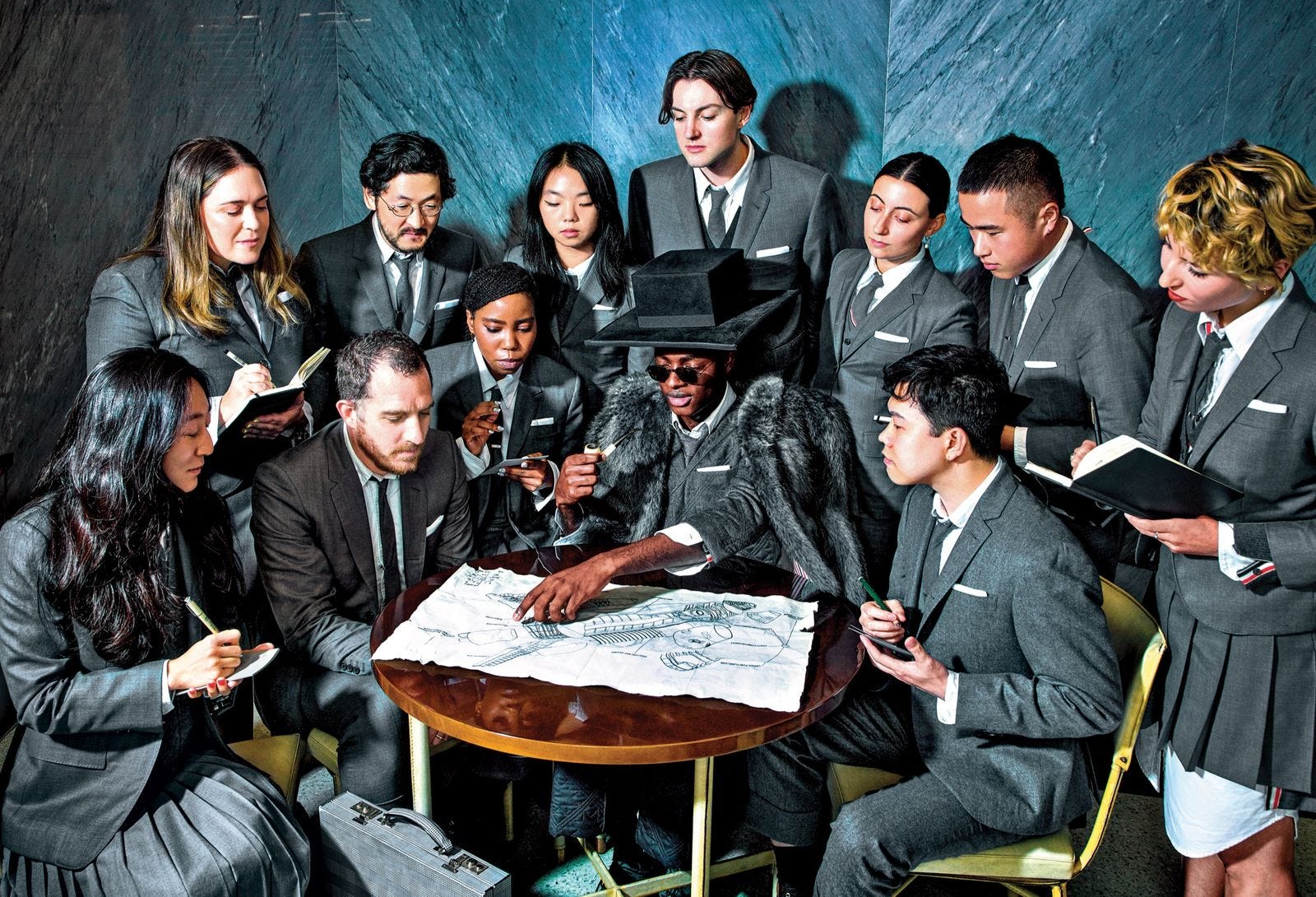
As I’m reading submissions (and usually people are sending me more than one poem), I kind of wait for that moment or spark when the piece of writing reminds me of a certain designer’s aesthetic. Or collection. I think about color, texture, abstraction, but also concrete images. Do I see Valentino red or Thom Browne grey? Is scale important? I think about so many things, but I also try to pull from past collections and contemporary collections. I would like readers to discover new writing, but also maybe learn a little bit about fashion, too.
Has working on Seam Allowance changed your approach to your own dress and wardrobe?
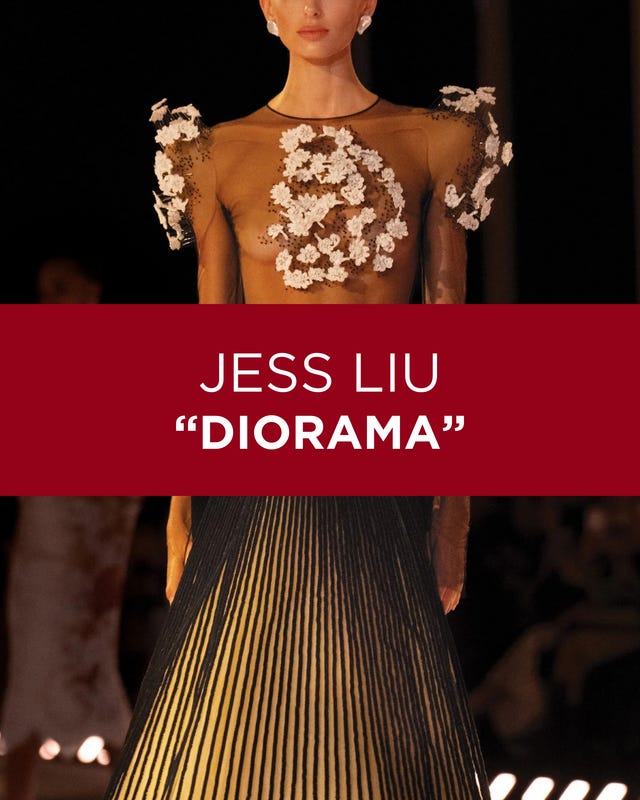
Not really. I think editing Seam Allowance has only tested my personal knowledge of fashion history. So far, everyone who has contributed has praised the pairings. To date, my biggest challenge has been Jess Liu’s poem “diorama.” I think because it was a long poem. But I do love a long poem. So much. So I had a lot of factors to work with in that poem. And that’s another thing about Seam Allowance: I am providing personalized editorial commentary for every single published piece. I don’t know many other journals out there doing that.
How generous to give such attention to each piece. Do you find yourself doing a lot of research when you’re writing your commentary, selecting images, etc. or are you pulling from knowledge you already have?
Sometimes. It depends on how far back I want to go. Sometimes it’s difficult to find descriptions of older garments and what materials were used. But I’ve been able to find whatever I was looking for so far. I’m definitely learning things I didn’t already know. I like falling down these rabbit holes sometimes.
I admire your eye for design and hunger for knowledge and history. What is a memorable look you’ve seen recently and why did it stand out to you?
This is a difficult question because so many exciting things are happening right now. But I was pretty blown away by Thom Browne’s women’s and men’s couture 2024 collection. One particular piece that folks online have been calling the “muscle dress.” One of my favorite things about Thom Browne is his continued celebration of asymmetry. Imperfection. Blurring gender roles. Other favorite living designers currently include Sarah Burton, Daniel Roseberry, Jonathan Anderson, Iris van Herpen, Robert Wun, and Rick Owens.
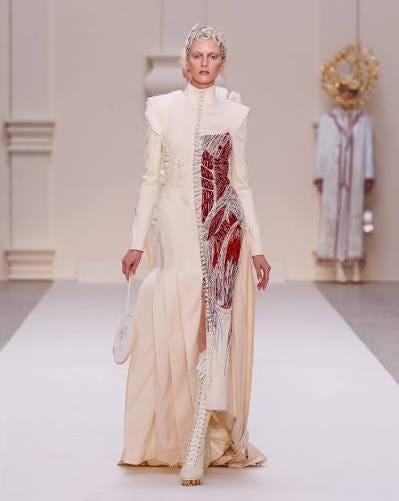
I just did a quick search of the “muscle dress” and it is truly phenomenal. I definitely see what you mean about blurring gender roles, embracing imperfection and asymmetry. Do you think of fashion as something more abstract, tangible, both, or something in-between?
Something in-between. The fashion I’m most interested in tells a story. But I prefer when the story feels more abstract. Or sculptural. I think haute couture is something closer to sculpture. Some haute couture garments have inspired me as much as paintings hanging in museum galleries. Maybe it goes back to Phantom Thread. I like that film because it seems to imply that every garment has a soul. That clothing contains depths. Maybe aura is the word.
Maybe this is one of the intersections between fashion and writing–the depth of a soul, what’s beyond surface level. A poem has an aura, too, so I see how a project like Seam Allowance could literally come to you in a dream.
Yes, I think writers and fashion designers have more in common than is realized. And we share similar frustrations and fears. Robert Wun has been very critical of commercialization and thinks more like an artist first. And writers typically want to publish books. When the book finally happens, the writer finds themselves in the awkward position of having to ‘sell’ and ‘market’ the book. So it’s important for me to continue thinking about whatever it is that lies beyond the surface level. Whether that is soul or aura or whatever is pushing us forward to continue making art. To express something bigger than ourselves.
Tell me, where do you see queer fashion in relation to mainstream fashion?
These days I think mainstream fashion is always-already queer. Like it or not. You see so many men wearing Thom Browne skirts. Dwayne Johnson, Walter Goggins, Russell Westbrook, Oscar Isaac. I appreciate men who are in touch with their masculinity. Fashion feels more timeless and slippery than ever. Especially for Gen Z. They appear to wear whatever they want to wear. And seem obsessed with the 90s. And other artists have taken notice. I just saw the pilot of Ryan Murphy’s The Shards, and, fashion-wise, the series could be set in 1996 or 2026. Who knows. I love that.
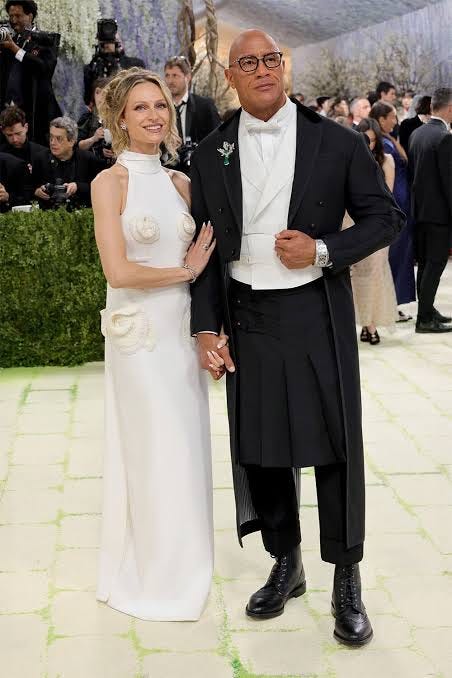
Do you believe there was ever a strong distinction between queer fashion and mainstream fashion, or is it a more recent development that they’ve come to resemble one another?
Clothing has always been gendered. But now fluidity is more celebrated. People feel more comfortable to dress however they want. I think it boils down to semiotics. What makes a skirt a skirt? And a kilt a kilt?
It’s so interesting to think about this resurgence of 90s and Y2K fashion, but now being more fluid gender-wise. Given your knowledge about fashion history, can you point to other times that styles or trends have resurfaced and been regarded or applied differently, especially in terms of gender and queerness?
I see a lot of silk returning. Especially in menswear. Exposed seams. Transparent purses and bags. And a recent YSL show also attempted transparent shoes for men. The sight of exposed feet caused quite the uproar. The way people were reacting to visible feet felt alarming to me. Even locally, I’ve been seeing a return of wide JNCO jeans. That’s also very 90s of course. I really think people are latching on to a specific era, decade, designer, and just embodying whatever feels right to them.
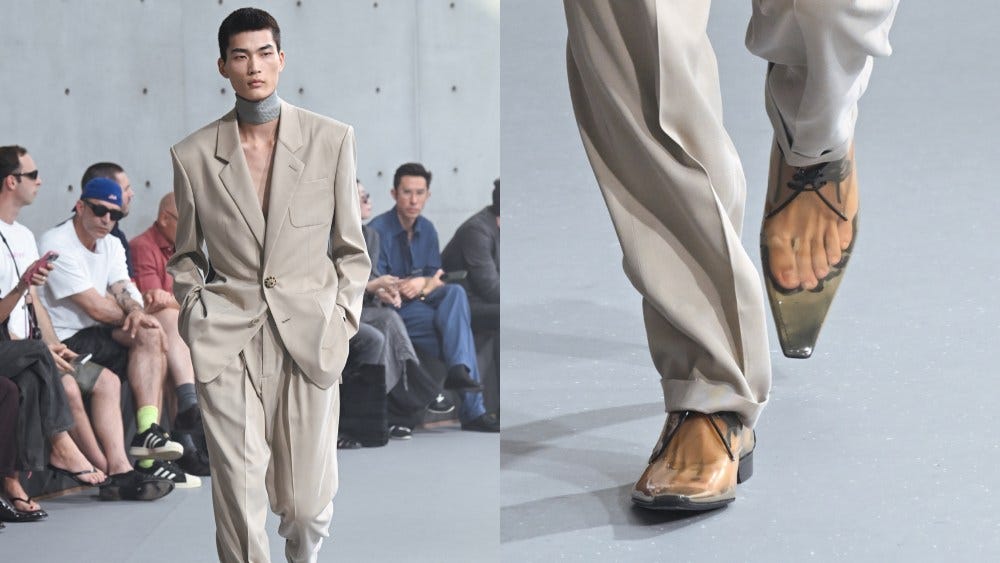
Would you say this is a kind of liberation fashion can offer us?
Yes, absolutely. I think about something the feminist psychoanalyst Manuela Fraire once said. About clothing being a “second skin” informed by language. To bring this back to masks, I see the mask as something that extends beyond the face. Mask can include sleeves, pant legs, accessories, shoes. I think fashion can be a way to differentiate. To reveal one’s true self. Fashion can also be used to rebel against what might be considered ‘fashionable.’
Often masks are seen as something that obscures the truth or reality, so I’m intrigued by this perspective on masks revealing something true about oneself.
To bring us back to Seam Allowance before we wrap up, what would you tell someone who is interested in fashion writing but not sure where to begin?
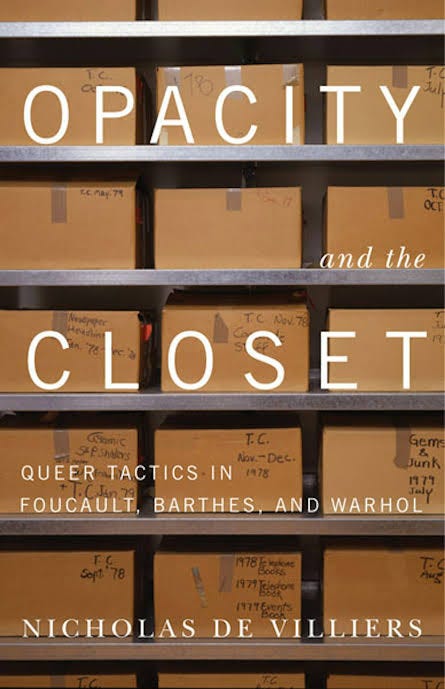
Yes, I think there’s a lot worth thinking about there. Especially in terms of the closet. Like, what is the relationship between masks and the closet? There’s a great book by Nicholas De Villiers called Opacity and the Closet.
As far as the other question, if you think you have something new to say, say it. Maybe start a blog. Or Substack feels suddenly popular. I’ve heard from a number of Gen Z, who are studying or interested in art, that they are frequently told “It’s already been done. Don’t bother. That idea has been done too.” But that’s simply not true. That’s so limiting. So much has yet to be written. So much has not been done. Uninspiring mentors and incapable teachers (who likely gave up on their own creative careers long ago) have convinced younger generations that originality is a stale concept. I think that is unfair. Cruel, even. I say write that story or poem. Show us your never-before-seen. Give us ‘your’ take. But we don’t need any more sequels. Or prequels. Or spinoffs. Etc.
Thank you for that fantastic pep talk! Lastly, what are your dreams for the future of Seam Allowance?
I’ve been overwhelmed (in the best way) with the response to Seam Allowance. And couldn’t be more grateful. I might be interested in adding a small press component one day. But we’ll have to wait and see what happens. At this moment in time, I’m feeling pretty excited about the direction things are moving in. Thanks for this opportunity to chat with you! I love what’s going on at just femme + dandy!
Thank you so much for your time, Paul–and for everything you’re doing for the literary scene and fashion-lovers everywhere!
Paul Cunningham is the Creative Writing Program Manager at the University of Notre Dame, where he also co-manages Action Books, an international poetry and translation press. He is the recipient of the 2021 Diann Blakely Poetry Prize and the 2015 Sparks Prize Fellowship. He is the author of A False Tongue (forthcoming from White Stag Press in 2027), Brillo (Lavender Ink, 2025), Sociocide at the 24/7 (DIAGRAM, 2025), and two titles from Schism Press: Fall Garment (2022) and The House of the Tree of Sores (2020). He is also one of the collaborators in Katrine Øgaard Jensen's Ancient Algorithms (Sarabande Books, 2025). From the Swedish, he is the translator of Helena Österlund’s Words (OOMPH! Press, 2019). He has translated two chapbooks by Sara Tuss Efrik: Automanias: Selected Poems (Goodmorning Menagerie, 2016) and The Night’s Belly (Toad Press, 2016). His most recent poetry chapbook is The Inmost (Carrion Bloom Books, 2020). His interests include literary translation in theory and practice, decadent poetics, fashion history and design, and ecocritical studies. He is also a board member of co•im•press, NonfictioNOW, and a faculty member of the International Network for the Comparative Humanities (INCH).
Felix Valentino Salmoran (he/him) is a Chicano poet, photographer, and musician. Everywhere he goes, Felix travels with at least one kite in the trunk of his car. When he’s not writing poems or flying kites, he’s in the garden with his husband, building a fire to gather round with friends, or beating his high scores on Clone Hero. His work appears online and in print: Poets.org, Oyster River Pages, Hayden’s Ferry Review, and elsewhere. Felix is currently pursuing his MFA in Creative Writing at Randolph College. Find him on IG at kite.wings.